Research which lawmakers have been consistent ocean and climate champions and which candidates plausibly promise better policies for our public seas.

Research which lawmakers have been consistent ocean and climate champions and which candidates plausibly promise better policies for our public seas.
There’s a chance Hurricane Marie, now a tropical storm, will head north over Southern California, bringing with it the risk of flooding.

Warning: this episode contains mentions of suicide.
New reporting has found that the impact of rough sea waves on rescue-boat crews in the Coast Guard can lead to long-term effects, including traumatic brain injury.
Dave Philipps, who reports about veterans for The New York Times, explains the significant blind spot in the Coast Guard and talks about how a teenager helped expose this widespread danger.
Guest: Dave Philipps, who reports about war, the military and veterans for The New York Times.
Background reading:
Photo: Ruth Fremson/The New York Times
For more information on today’s episode, visit nytimes.com/thedaily. Transcripts of each episode will be made available by the next workday.
Subscribe today at nytimes.com/podcasts or on Apple Podcasts and Spotify. You can also subscribe via your favorite podcast app here https://www.nytimes.com/activate-access/audio?source=podcatcher. For more podcasts and narrated articles, download The New York Times app at nytimes.com/app.
Hosted by Simplecast, an AdsWizz company. See pcm.adswizz.com for information about our collection and use of personal data for advertising.
Tuesday, August 12. My photo assistant Chika and I arrive at the Santa Fe Institute, Cormac’s home away from home, and load equipment into the library. Cormac is early, chatting up the kitchen staff. We introduce ourselves. Cormac is perhaps 5’6” tall, and I’m 6’2”, but his beaming “pleased to meet you” makes the greater impression on everyone in the room as he shakes our hands. Before we proceed to the library, I note the daylight coming through a side window. Cormac understands and obliges. He is as kind and accommodating in person as I hoped he’d be when we first spoke three Tuesdays before.
 Cormac McCarthy Photograph © Beowulf Sheehan http://www.beowulfsheehan.com
The sun is hard and coarse. In an adjoining courtyard, I mention the mystery and drama I see in the play of light and shadow there, and I ask Cormac if he’s open to being part of it. Yes. And how. My banter with Cormac focuses on the institute, what compels him to be here. “My friends are here. We love the same things. We argue.” What draws him to science? “It’s fun.” What drew him to Santa Fe? “It’s home.” We walk to and work in different corners of the library. Beyond the library is a balcony, and beyond it a nearly open sky. I invite Cormac to step to the balcony’s edge and take in “home.”
At our last institute location, a long exterior wall of adobe apart from its entrance, Cormac finally offers more: “Do you know the story of my typewriter?” No, I reply, just in case the story he’s about to tell is different from the one I know. He tells Chika and me that he donated his Olivetti Lettera 32 typewriter to an auction to benefit the Santa Fe Institute. It fetched $250,000. A friend then went on eBay and bought a new one for him for a few dollars. A proud smile rests on Cormac’s face. It might not have come if I’d said yes.
 Cormac McCarthy Photograph © Beowulf Sheehan http://www.beowulfsheehan.com
“Do you want to come to my house and make more pictures?”
I can’t wait. We pack while Cormac retreats to his friends.
*
Cormac’s truck is weathered, rusted, dinged, easy to find in a crowd. We follow him through the traffic lights and intersections, out to where streetlights turn into street signs and abutted buildings turn into yarded homes. Farther still, as the road straightens and lengthens, the view is of open space. Then, on the right, a two-story, perhaps 4,000-square-foot adobe house rises into view. Numerous vehicles sit sprawled under tarps across his dusty driveway and land. Following Cormac’s lead outside, I ask him about the cars he’s collected. Pointing to one, he says, “That’s a Corvette Stingray. I drove it back after I partied with Johnny Carson in Fort Lauderdale,” laughing to himself. My hometown.
 Cormac McCarthy Photograph © Beowulf Sheehan http://www.beowulfsheehan.com
Inside, in the middle of his grand living room, stands a pristine billiards table. Of course, I think. That he financed his way through his early life by playing pool is lore. I don’t ask about the table, and he doesn’t offer comment. Instead, he invites Chika and me upstairs. The wash of Cormac’s stairwell walls is as beautiful as an Irving Penn backdrop cloth. I photograph him along it, the sun pouring through his skylight, defining the space about him, redefining the shape of his face. Atop the stairs, Cormac asks what we think of the home so far, already knowing our answers. I ask him to stand strong and tall like the columns before him. After a few frames, he invites us to his bedroom, but first he wants to show us his son’s room.
____________________________

From The Father of the Man: The Last Author Portrait Sitting with Cormac McCarthy by Beowulf Sheehan. Copyright © 2026. Available from Autofocus Books.
Another month of books, another month of book covers. The books of August were as lush as you might expect, though not always in the usual ways. Here are a few of my favorites from the end of summer. What’d I miss?
 Devyn Defoe, Burnside; cover design by Frances diGiovanni at Rodrigo Corral Studio; cover art by Kate Awalt-Conley (Astra House, August 4)
Deranged, in the best way. I love the uneven overlap in both text and image.
 Annie Lord, The Project; cover design by Robin Bilardello (Harper, August 4)
A book cover you can feel.
 Paul Yoon, Etna; cover design by Oliver Munday (Scribner, August 4)
So simple—but it’s all in the color story.
 Matthew Futterman, The Cruelest Game: Chasing Greatness in Professional Tennis; cover design by Oliver Munday (Doubleday, August 4)
I love the sly distance between the racket and its shadow.
 Téa Obreht, Sunrise; cover design by Adriana Tonello at Rodrigo Corral Studio (Random House, August 11)
Another great color story (and appropriately giving Big Book Energy).
 Claire Carusillo, The Responsible Party; cover design and illustration by Clay Smith (Henry Holt, August 11)
There’s something deeply appealing—and charmingly ’80s—about the textures here.
 Daljit Nagra, Yiewsley; cover design by Kishan Rajani (Faber & Faber, August 18)
A knockout.
 Malavika Kannan, Unprecedented Times; cover design by Sara Pinsonault, artwork by Shyama Golden (Henry Holt, August 18)
The illustration is arresting, but for me the genius is really in the sharp droop of “unprecedented.” Says it all, really.
 Dorthe Nors, tr. Caroline Waight, Range; cover design by Alban Fischer (Graywolf, August 18)
A gorgeous collage that’s more complex than it first looks.
 Anjet Daanje, tr. David McKay, The Song of Stork and Dromedary; cover design by Emma Moore (FSG Originals, August 18)
Tricky, tricky. Also, that bird wants to tell me something, I can feel it.
 John Manuel Arias, Crocodilopolis; cover illustration by Rafael Nobre (Bloomsbury, August 25)
Another bold, gorgeous illustration.

Read More Both cases illustrate a distinct parallel: when authorities view books as threats to the regime, publishing restrictions inevitably transform into …
Read MoreWant to finally stop doomscrolling and actually do the thing you’ve been putting off? Itamar Shatz, author of the book Solving Procrastination, explains the evolutionary reason we avoid difficult tasks and the research-backed methods that can help you take action.
Follow us on Instagram: @nprlifekit
Sign up for our newsletter here.
Have an episode idea or feedback you want to share? Email us at lifekit@npr.org
Support public media with NPR+ and enjoy perks for over 25 podcasts like this one. This show’s perks include sponsor-free listening and convenient playlists of popular help topics like personal finance, getting healthy, and more. Learn more at plus.npr.org.
See pcm.adswizz.com for information about our collection and use of personal data for sponsorship and to manage your podcast sponsorship preferences.

Rachel Maddow looks at how Donald Trump’s shameful dedication to deporting immigrants has led him to betray Afghans who helped the U.S. military in Afghanistan and were promised protection in the U.S., leaving it to individual service members to push back against his disgrace. Trump is also betraying the Iranians he continues to claim he is helping with his war on Iran, shaming the United States with his dishonor.
Maggie Mullen, reporter for Wyofile.com, talks with Rachel about the strong resistance in Wyoming to Donald Trump’s efforts to interfere in their elections, despite Wyoming being very Republican and more supportive of Trump than any other state, according to polls.
Rachel Maddow explains how a secret bomb shelter installed under the White House during the Obama administration undercuts Donald Trump’s legal claim that he needs his ballroom constructed because it will include a necessary bomb shelter for the White House. Rachel is joined by Greg Werkheiser, co-founder of Cultural Heritage Partners, to discuss a coalition of organizations working to protect Washington cultural and historic landmarks from Trump’s reckless vanity projects.
Want more of Rachel? Check out the “Rachel Maddow Presents” feed to listen to all of her chart-topping original podcasts.
To listen to all of your favorite MS podcasts without ads, sign up for MS NOW Premium on Apple Podcasts.
Hosted by Simplecast, an AdsWizz company. See pcm.adswizz.com for information about our collection and use of personal data for advertising.
This year, “traditional” New Year’s resolutions through a library lens. So far, we’ve explored ways to exercise more, live life to the fullest, eat healthier, lose weight, save money, get organized, and learn a new skill. This month, tackling one of the most common resolutions: reducing harmful habits. Rather than focusing on our own habits, we’ll explore the habits library programs develop over time. Just because we’ve always offered a program or presented it a certain way doesn’t mean that it’s still the best option. Instead, thoughful evaluation can help us find what no longer serves community needs, library goals, or even staff capacity.

Our programs are only successful when they meet clear community needs and align with our vision and goals. However, those are often moving targets. Libraries exist in constantly changing environments. Community needs evolve, staff capacity shifts, strategic priorities change, and budgets fluctuate. Even the best programs reach the end of their lifecycle, and honestly reflecting on this means we adapt more quickly. Regular evaluation helps ensure programming evolves alongside our realities rather than responding to outdated assumptions. Intentional decision-making with our time, energy, and resources helps us steward limited resources to maximum effect. Evaluation is not about cutting programs. Rather, it’s about making room for more of what works by thoughtfully evaluating what doesn’t.
After a program, how will you know you’ve succeeded? Different programs require different standards. Attendance is only one metric, and it may not be the best metric for every program. Having 10 teenagers show up may resonate more than having 50 storytime families. Consider additional metrics such as repeat attendance, learning outcomes, patron engagement and feedback, and your overall program goals. My library’s Programming Manager creates an operational plan each year where she identifies programming goals and standards. With infant programs, success starts at 10 attendees, because programs with lower attendance often create more meaningful interactions. However, toddler and preschool attendance success starts at 20 attendees, since we have proven attendance. Scheduling for early learning programs focuses on weekly options, while teen programs focus on a few, high-impact options with emphasis on summer engagement. At the end of the day, measure programs against their purpose, not each other.

Once you’ve defined success, you must establish your review criteria. Even with different success metrics, your evaluation should be consistent, in both frequency and the questions asked. Consider scheduling a regular program review period using those consistent questions. Ensure that everything from your definition of success appears on the evaluation. If it’s important when planning, it should be important during evaluation. Without a good idea of what worked and what didn’t, you can’t make meaningful changes. My library uses a program evaluation form that includes questions for documentation, supplies and preparation, the program’s content, and patron impact and engagement. I send monthly reminders to staff who facilitated early learning programs. We combine this information with attendance statistics to consider what’s working and not. Qualitative feedback helps guide our content creation team in program revisions and updates. Build evaluation into your planning process rather than treating it as an afterthought.
While reviewing programs with consistent criteria on a consistent schedule is important, there are additional considerations. Having low attendance once doesn’t mean the program is a complete failure. Consider whether other factors, such as marketing, weather, or competing events, might impact attendance. Make note of these circumstances with your initial evaluation. Then, try the program again and see if its success changes. New programs often need multiple iterations before you see trends. Give the program a chance to grow and for your (and your community’s) marketing efforts to pay off. How often you offer the program may also impact your timelines. A program offered weekly will show trends much more quickly than one offered once per season. Establish an intentional pilot period based on the target audience, frequency, and overall programming goals. However, once that period ends, move forward with your intentional evaluation and decision-making.

Before completely retiring a program, it’s important to consider whether changes might boost its success. Once you know a program isn’t working, consider why, using both patron and staff feedback. Then, look at specific revisions. Do concerns fall into the program’s concept or execution, audience, timing, or delivery method? Next, choose one or two intentional changes. If content seems too hard for the audience, adjust either the age range or your approach. For low attendance, consider improving marketing, offering programs at a different time, or switching formats. From there, give the program another chance and reevaluate. Last year, our system undertook a massive review and revision of our puppet shows. We found content needed to be more interactive, shorter, and geared toward a younger audience. This year, we’re intentionally scheduling our revised show to evaluate the changes. Make reasonable adjustments before giving up on a program.
Identify clear criteria for when programs fully retire. This isn’t always a program failure. Community interests shift, staff capacity changes, and strategic priorities alter. In those cases, programs reach a natural conclusion. In other cases, revisions and updates aren’t enough to garner the interest or success the program needs to remain sustainable. For concerns related to cost or capacity, temporary retirement provides opportunities to consider partnerships or alternative materials. However, removing programs entirely creates space for better alternatives. Use your data and honestly identify what isn’t working, then be okay with moving on. My library previously offered Storytime Around the World, which introduced different languages in a familiar storytime environment. However, staffing changes meant we didn’t have sufficient language skills to sustain it. Retiring the program made space to consider partnerships for language storytimes. Remember, retiring a program doesn’t erase its value as part of the library’s history.

As you consider your programs, it’s important to remember that not every attempt is perfect. The OK Book by Amy Krause Rosenthal, featuring illustrations by Tom Lichtenheld, is a great reminder of this. The perfect pick for storytime, this title reminds readers that sometimes being okay is good enough, and it’s a great way to learn more. Readers may enjoy the details and that the word OK features prominently in each illustration. No matter what you’re trying, growth comes through experimentation. Programs don’t need to be perfect to teach us something.
As you build program evaluation practices, continually revisit your definition of success to ensure that your evaluation is honest and appropriate. Consider not only this year’s success but also success in the years to come. Healthy libraries aren’t ones that never change. They are willing to continually learn, adapt, and improve. Thoughtful evaluation helps us revise what we can improve and retire what no longer works, building programs that grow alongside our communities. For more inspiration, learn how to check on new services, evaluate programs, and ask questions. Stay tuned next month as we reduce stress by evaluating balance, staff needs, and internal processes. What program will you evaluate this month?
This post addresses ALSC Core Competency #3: Programming Skills and ALSC Core Competency #6: Administrative and Management Skills. Featured image created by Jaime Eastman, ALSC member.

Jaime Eastman is a senior Public Services Librarian and Early Learning Coordinator at the Harrington Library, one of the Plano (Texas) Public Library locations. Jaime is also working on at least two ambitious cross-stitch projects, dreaming of future travel plans, and reading far too many books. As a child, she wanted to grow up to be an author. Writing for the blog and publishing with Children and Libraries feels like a good start, and she regrets nothing about her adult decision to be a librarian doing storytimes, who didn’t have to grow up too much.
The post Reduce Harmful Habits: Evaluating Library Programs appeared first on ALSC Blog.

Michigan’s Senate nominee Abdul El-Sayed joins live as the vice president calls him “evil” and their feud gets personal.
Learn more about your ad choices. Visit podcastchoices.com/adchoices
Read More2026 NH Republican CD2 Debate: Rep. Goodlander’s policy positions … 2026 midterm elections. Fox News. New. 76K views · 26:52. Go to channel Toby …

This is a reminder for our call seeking proposals for a Gaming in Libraries issue of Library Trends. We will send a final reminder on September 14.
If you have questions about article topic ideas during the submission period, please email Grace Murdock at gkmurdock@noctrl.edu. Grace, a student library intern, will anonymize your inquiry for us and send you our response. For non-topic questions, please contact the editors: Carl DiNardo, carldinardo@usf.edu, and Rebecca Strang, rdstrang@noctrl.edu.
This issue of Library Trends seeks to examine the current state and future directions of gaming initiatives in libraries of all types. We welcome articles and case studies that explore how libraries are building, managing, and assessing game collections and gaming programs, as well as the impact of these initiatives on library users and communities.
We invite proposals for original articles (4,000-8,000 words) that address gaming in library contexts. Full details are available with the proposal form. Proposals are due September 21, 2026.
Your quest awaits!
Sincerely,
Carl DiNardo, Research & Instruction Librarian at the University of South Florida
Rebecca Strang, Outreach & Engagement Librarian at North Central College (IL)
L.A. County announced Monday that it had filed a lawsuit against State Farm General after hundreds of victims of last year’s devastating wildfires complained that their policy claims had been delayed, denied or underpaid.

Nature, Published online: 01 September 2026; doi:10.1038/s41586-026-11071-9
Author Correction: Plasticity and language in the anaesthetized human hippocampus
Nature, Published online: 01 September 2026; doi:10.1038/d41586-026-02737-5
China’s regulatory innovation for new biomedical technologies
Nature, Published online: 01 September 2026; doi:10.1038/d41586-026-02383-x
Astronomy that has long gripped people’s imagination, and a celebration of the health benefits of sunshine and the open air in this week’s pick from the Nature archive.
Read MoreThe latest local news, weather and sports for central Indiana at the 6 p.m. hour on Monday, Aug. 31, 2026 … 2026 midterm elections. Fox News. New. 25K …

Read More… startup that provides real-time policy guidance to officers in the field. Three years later, Blue Voice is coming out of stealth with $6 million …
A catastrophic flash flood tore through the Grand Canyon’s Bright Angel Canyon, killing at least two, leaving more than a dozen missing and wrecking trails and bridges.

Read More250th of the American Revolution. Giving. Giving Homepage · Fiercely Forward … educational activities of Clemson’s art and design faculty. The …
Read More… American or anti-Israel” views, creating a “pall of fear … Education Department takes first step to strip ABA of accreditation authority .

Read More, addressing concerns among Democrats that the Trump administration could use the military to interfere with the vote. … 2026 midterm elections.”.
Read MorePlease select at least one newsletter. Newsletter example on mobile. Editors’ picks. The outside of the U.S. Department of Education building is shown …
Read More… Department of Education said violated its equal treatment laws or merit-focused policies. … ‘Opportunity for all’ is the American dream, but it …
Read MoreMaine’s new Democratic Senate candidate says Collins is ‘in trouble’ ahead of midterms … 2026.” On the campaign trail, Jackson brings up …
Read More… 2026 midterm elections.” Slotkin’s office has not yet received a reply … Anxiety among Democrats that the Trump administration could try to meddle in …
Read MoreHiroshi Ishiguro and Shogo Nishiguchi are co-Founders of Avita, Inc., an ambitious startup at the intersection of generative AI, robotics, and …
Read More… election-related material in a letter to a Democratic senator … 2026 midterm elections.” Slotkin, a member of the Senate Armed Services …
Read MoreI’ve always preferred midterm elections to the much more ballyhooed presidential ones. In presidential years, everyone focuses so much on one race – …

Read MorePoliticians should back legislation to prevent prompted generative AI outputs from being copyrighted across film, TV and music.
Read More Texas schools already have processes for reviewing challenged books. Those … Stop this attack on the freedom to read. Stand up to political …
Trump’s war is far from over, top military leaders are warning Hegseth that prolonged ops in the region are unsustainable, and Americans have been financing Pentagon propagandists who’ve been secretly collecting taxpayer money to try to convince us that things are going great in Iran. This is not the time for congressional Democrats to allow Republicans to easily pass a spending resolution that keeps the government open. At the same time, Trump keeps handing gifts to Democrats—like his sell-out to tech oligarchs and his praise of data centers.
Plus: The Venezuelan oil deal is a socialist PR stunt, vile Laura Loomer is trying to bring back the normalization of Islamaphobia, Massachusetts voters should recall the risks of sending an 80-year-old back to the Senate, and Marco really is the worst Cabinet member of all
Bill Kristol joins Tim Miller.
show notes:
The Post on the Pentagon propagandists collecting taxpayer money
The WaPo on military leaders warning Hegseth against extended Iran operations
Military Times on the damage done to the U.S. base in Bahrain
Bulwark LIVE: GOOD FIGHT TOUR with Tim, Sarah, Sam and JVL is coming to the Southeast in October. Tickets are on sale NOW. Head to TheBulwark.com/Events for details and to get your tickets.
As always: Watch, listen, hit the like button or leave a comment. We want to hear from you.
Ad-free editions of The Bulwark Daily are available exclusively for Bulwark+ members.

Tim Miller’s Bulwark Daily is available wherever you get podcasts and on YouTube. New shows drop each weekday afternoon. If you like the show, leave a comment and ⭐⭐⭐⭐ wherever you listen. Add The Bulwark Daily to your player of choice, here.
Read MoreAltimetrik Achieves the AWS Generative AI Specialization. Prev Next. Comments are closed. Follow Us. AiThority.com covers AI technology news …
Read More “A lot of the emphasis on book bans and censorship attacks has been … In 2024, the state adopted a Freedom to Read Act, which states that …


ChatGPT, Gemini, and Claude quietly get worse over time. This hidden setting fixes them. Your favorite AI chatbot might be remembering a little too much.
By Andrew Grush • Aug 29, 2026 — 5:00 AM ET
I’ve been using LLM-based AI in some capacity for roughly half a decade, and in that time, the industry has changed significantly. Not only have newer competitors like Gemini and Claude arrived on the scene, but older tools like ChatGPT have also evolved dramatically. We’ve seen better third-party app integration, increased reasoning capabilities, and countless other advancements. However, I would argue that the ability to retain memories matters most.
Retaining context from previous conversations helps the AI better anticipate your needs within a single session. It also allows the tool to learn more about you, ensuring that future conversations are tailored to your preferences. However, there is a real downside to memory accumulation that not everyone considers. I’ve found that starting with a new AI usually requires significant input to generate the responses I need and fully understand my user profile. Once it reaches this data “sweet spot,” the AI becomes much more pleasant to use. Yet, slowly over time, the experience often seems to degrade again.
Let’s discuss what causes this gradual erosion, along with some simple maintenance steps to prevent old AI memories from dragging down your experience.
1195 votes

Old memories can linger long after you no longer need them in a few different ways. Sometimes, random one-off questions or hypothetical tasks are the root of the problem. For example, years ago, I ran a mock simulation of how I would hypothetically invest in the stock market. At the time, I made it clear this was just for fun. Almost six months later, while planning real investments, I asked the AI a related question. It confidently referenced a fake stock I had previously “invested in” and informed me how much its value had increased.
This is why I recommend using your AI’s “incognito” mode for less important inquiries or casual experimentation. This simple step can prevent unneeded memories from forming in the first place. Of course, that is far from the only way unwanted data builds up.

Some of this is simply the natural drift of time. You may have given the AI instructions a year ago that were relevant at the time, but your work or personal goals have since evolved. Humans are not static, but an AI sometimes struggles to understand this evolution.
You might assume that newer instructions will naturally overwrite older, conflicting memories. For instance, your previous religious beliefs may have influenced how the AI interacted with you. If you later went through a period of deconstruction and shifted your beliefs, you might mention this in a new conversation.
The AI will then commit your new viewpoint to its memory. The problem is that it may still retain your old, opposing views. This can result in disjointed responses, or an awkward mix of both viewpoints when discussing spirituality.
Read more: Why ChatGPT, Gemini, and Claude get worse over time (and how to fix it) – Android AuthoritySource: Why ChatGPT, Gemini, and Claude get worse over time (and how to fix it)


By Diego Pineda Pacheco, Published Aug 29, 2026, 4:29 PM EDT
Diego Pineda has been a devout storyteller his whole life. He has self-published a fantasy novel and a book of short stories, and is actively working on publishing his second novel.
A lifelong fan of watching movies and talking about them endlessly, he writes reviews and analyses on his Instagram page dedicated to cinema, and occasionally on his blog. His favorite filmmakers are Andrei Tarkovsky and Charlie Chaplin. He loves modern Mexican cinema and thinks it’s tragically underappreciated.
Other interests of Diego’s include reading, gaming, roller coasters, writing reviews on his Letterboxd account (username: DPP_reviews), and going down rabbit holes of whatever topic he’s interested in at any given point.
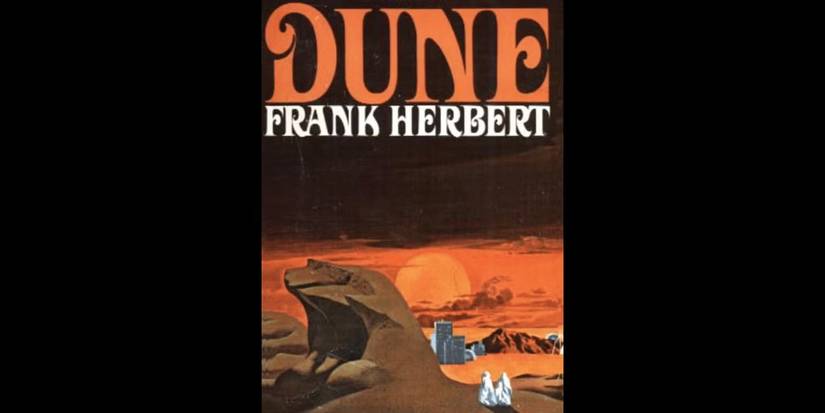
Far more than just one of the most influential sci-fi books of all time, Frank Herbert‘s Dune is a strong contender for the title of greatest sci-fi novel ever written, a genuinely foundational masterpiece that has only continued to get better with age. After being hired to write a magazine article about sand dune stabilization in Oregon, Herbert conducted such detailed research and was so deeply fascinated by his findings that he was inspired to write Dune.
Thematically complex, beautifully written, and as hugely imaginative as any sci-fi fan could possibly hope, Dune is a classic whose fame is entirely well-deserved. Its worldbuilding is particularly strong, dropping readers into an admirably complex and believable universe without ever over-explaining any of its rules, politics, or cultures. Arrakis and the Dune universe as a whole feel remarkably lived-in; their ecology, politics, and economics are incredibly nuanced; and the story as a whole sees its themes shine through all the more thanks to their being supported by such a riveting world.


With Neuromancer, William Gibson completely revolutionized science fiction forever, and with the Apple TV television adaptation fast approaching, now seems to be about as great a time as any to check out this essential ’80s classic. One of the most prophetic sci-fi books of all time, Neuromancer redefined and popularized the cyberpunk subgenre and anticipated many elements of the modern digital age.
But whereas some prophetic sci-fi books are fun to read mostly just because they’re prophetic, Neuromancer is a classic that has aged like fine wine, one that’s still just as entertaining today as it was back when it was published. Bolstered by Gibson’s wonderfully rhythmic prose, the worldbuilding in Neuromancer makes it feel remarkably detailed and lived-in, which is precisely the kind of sensorial complexity that any sci-fi novel needs in order to be legendary.
Read more: The 10 Greatest Sci-Fi Books With the Best Worldbuilding, Ranked – ColliderContinue/Read Original Article: The 10 Greatest Sci-Fi Books With the Best Worldbuilding, Ranked
Read More… Public Library District, a children’s librarian at Fremont Public Library, an early literacy coordinator at Glenview Public Library, a youth …

Women are collapsing right and left on the covers of novels. I was first drawn to the trend by the humorous image on the cover of Emily Nemen’s Clutch, wherein a smartly-dressed woman is lying prone, immobile. If you love a women-pushing-forty-behaving-badly romp or you dig novels with rom-com wittiness minus the tropes, this despairing friend group is for you.
It seems the Australians were way ahead of us in the fainting covers trend, as discussed in a 2022 article by Rafqa Touma in the Guardian. In the early 2020s, the Aussies lead the charge on images of women who had had enough, who were giving up, as it were. While we here in the states may be feeling, collectively, that yearning to collapse under the pressure of a ramped-up daily life post-pandemic, only in 2025 did our publishing industry start portraying that angst front and center.
From the Guardian article, I found the beautiful, disturbing Sorrow and Bliss, which is about a woman suffering with mental illness. The narrator presents herself as a wry, sardonic wife who is never satisfied. Through sharp prose and cutting dialogue, Meg Mason gives us a gorgeous portrait of a person struggling sans diagnosis. This book is for lovers of Sally Rooney or Meg Wolitzer. Interestingly, there are different versions of exasperated women on the British vs. the American cover. I think I prefer the painterly, domestic version.
Do these images make you want to spend some time on the couch? Here’s a suggestion for you: Nicola Dinan’s Disappoint Me, published in 2025. The novel’s protagonist, Max, is an Asian American trans woman (as is Dinan) with the cutting wit of a millennial. She’s put up with more than enough trans-phobia and is speaking out. The novel is an edgy study in relationships and gender identity. Interestingly, the UK cover portrays no collapse at all, only a red balloon nailed to a wall. Deflation, none-the-same.
For more millennial ennui, check out Spanish author Beatriz Serrano’s Discontent, originally published in Spain in 2023 then in English in 2025. Marisa, a prescription drug-addled, successful “creative” at an ad agency, can’t stand her job or really anything about the life she’s built around it. She pawns work off to her interns so she can scroll on YouTube or visit her favorite museum, seeking solace for her existential angst in the art of Hieronymous Bosch. Things quickly unravel for Marisa on a woodland company retreat where she can no longer hide behind her illusions. Discontent is a sharp, funny novel-length rant about the growing pains of adulthood.
Some might argue that Nicola Maye Goldberg’s protagonist in Other Women and Other Stories is not, in fact, collapsing on the cover, but is looking at something—a dropped contact lens? a tiny spider? – on the bathroom floor. This intimate portrait of a young woman who is spurned by a married man, spawns reviews from both lovers and haters alike. It’s not a plot-driven novella, but a slow burn of angst. The other stories in the collection also delve in detail into women’s discontent and insecurities.
Essayist Bonnie Friedman’s first novel, Don’t Stop, is worth picking up just to immerse yourself in the prose. In it, we meet a 41-year-old woman who has a sudden, transformative sexual awakening just as she is on the eve of achieving literary success. The onset of an affair with a cruel, sadistic man sparks an implosion in her married and professional life that she seems powerless to curb, forcing her to reckon with who she thinks she is and what she truly wants.
The books on this list are described as darkly comic, and they all live up to that description. There’s no denying there’s some humor in the posture of defeat, as long as we get up again and carry on, just as the protagonists in these novels do.
~ posted by Tavi
Renters could get access to solar panels if the governor signs two bills just passed by the Legislature.
From an LC Blog Post:
In 2025, the Library introduced its AI Sandbox for staff initiative to do just that. “Sandbox” environments have been used since the early 1970s to provide protected spaces for development and experimentation without risk to systems.
[Clip]
While AI technologies have growing potential to augment and enrich the Library’s collections and services, experimentation and security are key. To better understand how these creative and innovative methods might work with various materials and conditions, the most recent cohort of the Library’s AI Sandbox for staff supported over a dozen small-scale experiments. Teams incorporated technical and subject matter expertise to focus their experimentation on the real-life demands and possibilities for Library workflows.
[Clip]
Projects focused on materials spanning the Library’s rich collections: legal records and briefs; circulars and regulations; images; talking books; audiovisual materials, classified ads from historic newspapers; web archived government PDFs; manuscript materials in Arabic, Persian, Ge’ez, Turkish, Armenian, Georgian, Japanese, Chinese, and Hebrew; children’s and young adult books, sound recordings; web archived metadata; record annotations; oral history recordings; non-Latin monographs; catalog records; training materials and resources; and even more items accessible via the Library of Congress collections API.
Learn More, Read the Complete Post
The post “A Secure Environment to Explore”: Learn About the AI Sandbox Initiative For Staff at the Library of Congress appeared first on Library Journal infoDOCKET.
Read MoreBorn from King Philip II of Macedon and Olympias of Epirus, educated by Aristotle, Alexander takes the lead of the League of Corinth, a coalition of …
Read More… Library), Ann Agee (Emerita Librarian), Christa Bailey (Emerita Librarian) and Associate Librarian Adriana Poo. Lowering the cost of textbooks is …
Read MoreMedway Public Library Book Sale · Friends-Only Sale: Friday, October 16, from 6:00 pm to 8:00 pm. You can join or renew your membership at the door to …
Read MoreA community note attached to the X post noted that, while leaking classified material is illegal for government employees, the US supreme court ruled …
Read MoreU.S. House lawmakers return to Washington on Monday with a short to … government fully funded through early December, removing the …
Read MoreGenerative AI is making it easier to produce more content and harder to … Kang founded Clipto in 2023 with several members of his previous startup’s …

Space Scopes Nancy Grace Roman (1925–2018) was NASA’s first chief astronomer, its first female executive, the “Mother of Hubble,” and the woman who built its space-astronomy programme from scratch — yet she remained far less famous than the telescope she made possible.
NASA’s first chief astronomer created its space-astronomy programme, helped turn Hubble into a real mission and now has a newly launched observatory carrying her name. By The Daily Orbit · Edited by Lachlan Brown Published August 30, 2026 · How we edit Dr Nancy Grace Roman, NASA’s first chief of astronomy, poses in 1966 with a model of what would become the Hubble Space Telescope. Credit: NASA.

When a Falcon Heavy left Kennedy Space Center on Sunday, it carried an observatory named for a woman who had died eight years before the launch and two years before NASA put her name on the mission. Nancy Grace Roman never saw the Nancy Grace Roman Space Telescope. She did, however, create the NASA programme that made telescopes like it possible.
Roman was the agency’s first chief of astronomy and the first woman to hold an executive position at NASA. She developed a national space-astronomy programme when the field barely existed, helped transform the Large Space Telescope from an attractive concept into a serious project and made the case for it across NASA, the White House budget system and Congress. That telescope became Hubble. It entered orbit in 1990 and grew into a cultural symbol whose images are recognized far beyond astronomy. Roman’s role was known within NASA and the scientific community, but her name remained much less familiar than the machine she had spent years making possible.
The new observatory is an attempt to correct that imbalance. It is also a continuation of her work. An astronomer before NASA existed NASA’s biography of Roman begins with a child who organized friends into an astronomy club between fifth and sixth grade. By seventh grade, she had decided to become an astronomer, despite being told repeatedly that science was not a career for women. Roman was born in Nashville, Tennessee, on 16 May 1925. Her father, Irwin Roman, was a geophysicist and her mother, Georgia Smith Roman, was a music teacher who took her outdoors to see birds, trees, flowers and constellations.
Roman later said the astronomy was what stayed with her. She earned a bachelor’s degree in astronomy from Swarthmore College in 1946 and a doctorate from the University of Chicago in 1949. At Yerkes Observatory she studied stellar spectra and the composition and motion of stars, work that established her reputation as a research astronomer. The profession did not offer her an equal route forward. Roman saw women with years of experience denied tenure and concluded that her own prospects in academic astronomy were poor. She left for the US Naval Research Laboratory in 1955, where she entered the still-young field of radio astronomy and eventually led its microwave spectroscopy section. The move away from a conventional academic career placed her close to the emerging government space programme. It also gave her experience with new instruments, large organisations and scientists working across institutional boundaries.
Read more: Nancy Grace Roman (1925–2018) was NASA’s first chief astronomer, its first female executive, the “Mother of Hubble,” and the woman who built its space-astronomy programme from scratch — yet she remained far less famous than the telescope she made possible. – Space DailyContinue/Read Original Article: Nancy Grace Roman (1925–2018) was NASA’s first chief astronomer, its first female executive, the “Mother of Hubble,” and the woman who built its space-astronomy programme from scratch — yet she remained far less famous than the telescope she made possible.

NASA’s next big space telescope has left Earth, but it’s not ready to start observing the heavens just yet.
The Nancy Grace Roman Space Telescope launched yesterday (Aug. 30), riding a SpaceX Falcon Heavy rocket into the heavens. Astronomers are very excited about Roman, for it’s expected to discover thousands of new exoplanets and shed light on mysterious dark energy and dark matter, among other accomplishments.
Such science work is a few months off, however. Here’s a brief rundown of the next steps for the Roman team.
The first order of business is getting Roman to its destination. The 42-foot-long (12.7 meters) scope isn’t staying in Earth orbit; it’s headed to the sun-Earth Lagrange Point 2 (L2), which lies about 930,000 miles (1.5 million kilometers) from our planet in the Marsward direction.
There are multiple reasons to target L2, which also hosts NASA’s James Webb Space Telescope (JWST) and Europe’s Euclid probe.
“At this special place in space,” NASA officials wrote in a Roman explainer, “gravitational forces balance to keep objects in steady orbits with very little assistance.”
“Roman’s barrel-like shape will help block out unwanted light from the sun, Earth and moon, and the spacecraft’s distant location will help keep the instruments cool,” they added. “The thermal stability of an observatory at L2 will provide a ten-fold improvement beyond Hubble in much of the data Roman will gather.”
And don’t worry about Roman and JWST bumping heads; though their cosmic addresses will be the same, they won’t actually share space.
“Like Webb, Roman will trace out a large orbit around the actual L2 point — much larger than the moon’s orbit around Earth — and the two will easily be kept far apart,” NASA wrote in a different Roman piece.
It’ll take Roman about 30 days to fly out to L2 and settle into its looping orbit there. A new round of work will then begin for the Roman team.
That work is “commissioning” — making sure that all of Roman’s systems and subsystems are working properly, as is its science gear, which consists of the Wide Field Instrument (WFI) and the Coronagraph Instrument (CGI).
WFI “is a 300-megapixel infrared camera that will allow scientists to look very far back in time,” NASA officials wrote in the explainer. “Seeing the universe in its early stages will help unravel how it has expanded throughout its history, which will hint at how it may continue to evolve.”
CGI is a technology demonstration that will block the light of distant stars, allowing Roman to spot a wealth of previously unknown alien worlds.
“It will be far more powerful than any other coronagraph ever flown, seeing planets that are almost a billion times fainter than their host star,” NASA officials wrote.
Roman should be ready to begin its science work in early 2027, according to the nonprofit Planetary Society. Its science life is slated to last five years, but astronomers are doubtless hoping for more. And there’s precedent for such optimism; after all, NASA’s Hubble Space Telescope is still going strong today, more than 36 years after its launch.
Hubble is a special case, given that astronauts repaired and upgraded it over the course of five servicing missions between 1993 and 2009. But other NASA space telescopes have far outlasted their warranties without such help. For example, the Chandra X-ray Observatory is operational in Earth orbit today, more than 25 years after its launch — and it has overcome budget issues along the way.
Read More#librarian #ditl #asmr #prep #schoollibrary”. Librarians Of TikTok. Before the Bell Prep©️MeetMeInTheMediaCenter | Open the Library With Me First …

all things library and life.. from a librarian