America says ‘Good night and good luck’ to radio giant built by Washington State University alum
Sun., May 24, 2026

By Nick Gibson nickg@spokesman.com(509) 459-5039
A media giant whose legacy was built by a Washington State University graduate bellowed its last few notes last week.
CBS News Radio issued its last broadcast at 11 p.m. Friday, marking the end of a 99-year run . Company and newsroom leadership said the decision to shutter the network did not come easily, but was necessary due to audience decline, “challenging economic realities” and a shift in programming strategy.
All radio jobs associated with the network, carried on 700 affiliated stations nationwide, were eliminated, according to a news announcement from the company.
“We understand how difficult this news is for our staff and their colleagues, who have worked side by side with us to cover some of the most significant stories of our time,” CBS News President Tom Cibrowski and Editor-in-Chief Bari Weiss said in a statement.
The end to CBS News Radio is another sign of the “intense period of change” journalism finds itself in, said Bruce Pinkleton, dean of the Edward R. Murrow College of Communication at WSU. The college’s namesake played a large role in bringing the network to the heights it once enjoyed
“It’s a tragic loss in my mind,” Pinkleton said. “There were nearly 700 radio stations shut down, and this is Murrow’s network. A truly historic network.”
Murrow was raised on a homestead in Blanchard, Washington, and enrolled at then Washington State College after earning the tuition to do so by working in the timber industry after high school.
The university was one of few in the nation with radio courses and a serviceable station, which is how Murrow first got introduced to the medium.
“We had some engineers who were interested in radio, and I presume, given our remote location, that might have contributed to some of the development,” Pinkleton said.

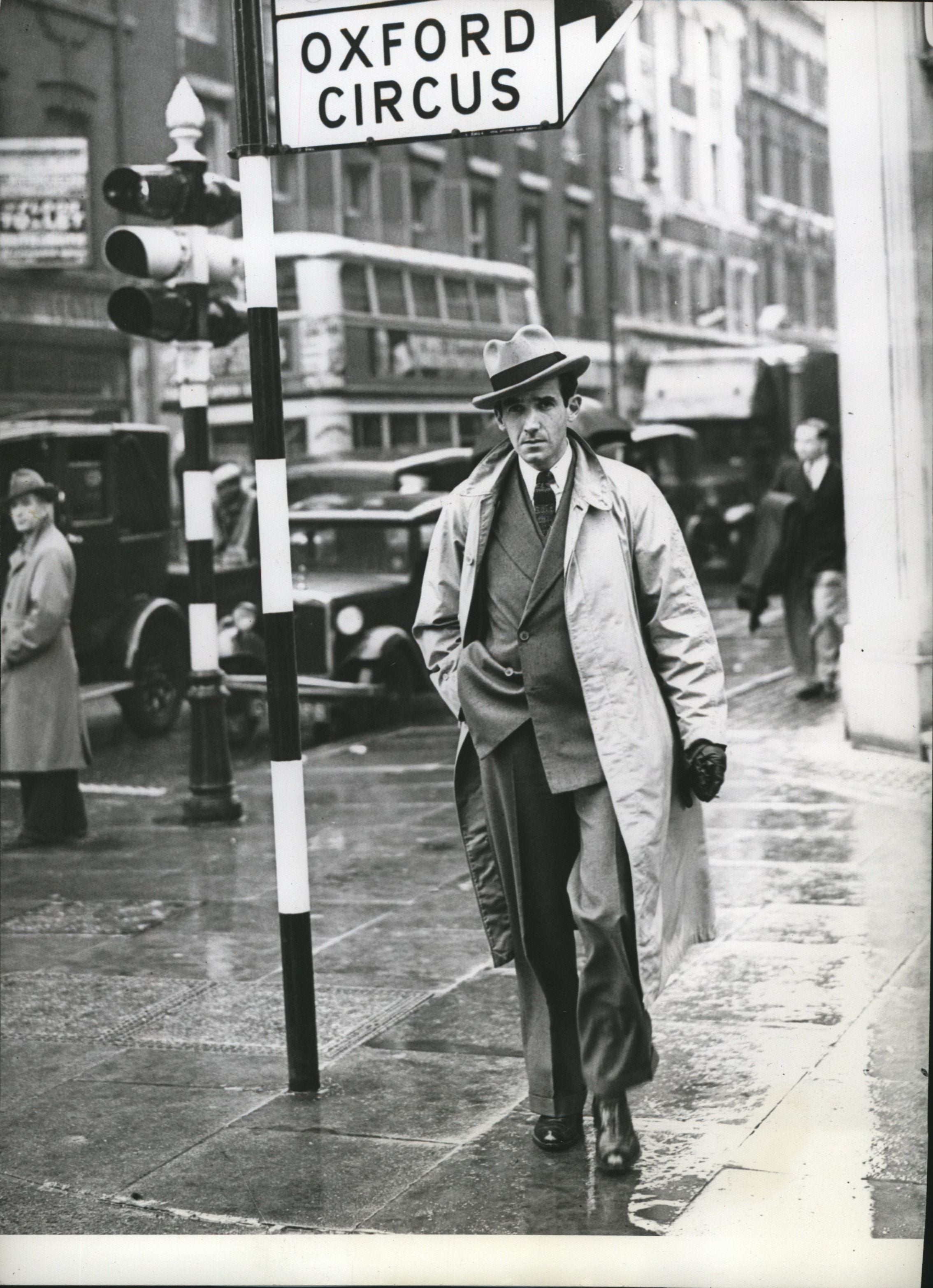
The 1930 graduate went from humble roots to an industry leader with his fair, unflinching reporting that brought the world directly to the listener. He became a household name during World War II for his coverage of Nazi air raids on London, live from the rooftops, and later was one of the first reporters at the Buchenwald concentration camp in Germany.
By the end of the war, Murrow flew on 25 Allied combat missions in Europe, providing a bird’s-eye view of war operations in a truly pioneering fashion. His office in London was bombed on three occasions during the Blitz, but Murrow escaped injury each time, according to university records.
“He flew numerous bombing raids, so many bombing raids actually he would have been dismissed if he’d actually been enlisted in the military,” Pinkleton said. “He has really had a profound influence on the state of journalism and in our field, and broadly in the world through his work. That all really started with radio.”
His signature sign-off, “Good Night and Good Luck,” became the title of Murrow’s biopic, which is still required viewing for all Murrow College freshman.
Later in his career, Murrow’s reporting would prove pivotal in ending the Red Scare that gripped American politics, and in highlighting the abuses migratory farm workers in America faced. Pinkleton said he has a particular shine for the latter because it highlights how good reporting can draw focus to “critical events, things in our country that many aren’t familiar with.”
“We talk about ethics and courage and professional excellence – what I would kind of call broadly ‘the Murrow standard,’ ” Pinkletion said. “It’s a part of our DNA and part of our thinking, and it really is part of what we try to communicate to students, and what we think about as faculty.
WSU professor Lawrence Pintak, a former CBS News Middle East correspondent, said Murrow was the gold standard of broadcasting. He recalled how when on assignment in London one time, he signed off with the same “from London” as Murrow would, and a shiver ran down his spine.
“The bottom line is CBS Radio was created and built by Murrow, and every one of us who has gone to work for CBS News has, I don’t care whether they ended up president or Dan Rather as anchor, walked through the doors that first time saying, ‘Oh my God, this is the house that Murrow built and I’m working here,’ ” Pintak said.
Pinkleton said that in Murrow’s day, and still in many locations across the world, radio served a key function. It’s a cost -effective way to get information to the masses, brings listeners to the front lines of a developing scene and can be immediate in its delivery.
Radio impacts an audience in a way other reporting mediums cannot, Pintak said. His coverage of a massacre of European miners in then -Zaire, Africa, which involved his own graphic descriptions of what he saw, is something that would not have been done justice on television or in print. Murrow’s reporting from Buchenwald was impactful in much the same way.
Read more: America says ‘Good night and good luck’ to radio giant built by Washington State University alum – The Spokesman-ReviewContinue/Read Original Article: America says ‘Good night and good luck’ to radio giant built by Washington State University alum
Discover more from DrWeb's Domain
Subscribe to get the latest posts sent to your email.