The Long Road to the Fourth Industrial Revolution: 40 Years of Warnings
By Dr. Web, aided in research and formatting by Perplexity AI.
We talk about the “Fourth Industrial Revolution” like it exploded out of nowhere in the 2020s. We act as if ChatGPT and the agentic AIs of 2026 just fell from the sky. But looking back at my own experience and library, I realize we were warned. We were told exactly what was coming. And it was in our fiction and non-fiction.
For the last week, I’ve been hunting down the “through-thread” —the specific published books that predicted our current reality vis-a-vis AI. From the fiction of Gibson to the warnings of Harari, our total evidence is overwhelming: This wasn’t an accident. It was a schedule. And the truth is we have to face this future.
Here is the history of the future we are living in right now, 2026, and the years to come…

Phase 1: The Setup (1982–1999)
The Shift from “Stuff” to “Thinking”

It started with John Naisbitt. In 1982, his book Megatrends didn’t just predict the Internet; he predicted the psychology of the Internet. He argued that as we moved from an industrial society (making stuff) to an information society (processing data), we would crave “High Tech, High Touch.”
Dr. Web’s Note: Naisbitt was the first to see that the more screens we had, the more we’d pay for human connection. In 2026, with AI generating 90% of our content, the most valuable commodity left is “verified human” text. He called it 44 years ago.
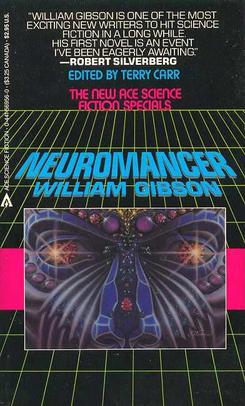
Two years later, William Gibson’s Neuromancer (1984) gave us the visuals. He coined “cyberspace,” but more importantly, he introduced us to the idea of AI not as a robot butler, but as a ghost in the machine—an entity with its own agenda. Gibson’s “Wintermute” AI wasn’t serving man; it was trying to merge with another AI to become something… else. Superintelligence? Conscious entity?

By the time Ray Kurzweil wrote The Age of Intelligent Machines (1990), the math was clear. He predicted that a computer would beat a human at chess by 1998. IBM’s Deep Blue did it in 1997. He predicted the explosion of the World Wide Web. He told us the exponential curve was coming, but we treated it like science fiction.
Phase 2: The Merge (2000–2015)
When Tools Became Partners

AI image by Perplexity.
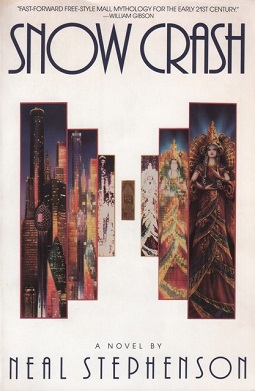
Neal Stephenson’s Snow Crash (1992) had already given us the “Librarian”—a virtual agent that could parse the entire Library of Congress to answer a single question. Does that sound familiar? That is what AIs are trying to do now, and failing with slop.

But then Nick Bostrom published Superintelligence (2014) and pulled the emergency brake. He introduced the “Control Problem.” He asked a simple, terrifying question: If we build a machine that is smarter than us, why do we assume it will listen to us?
Dr. Web’s Note: This is the era where the “nerds” stopped smiling. Bostrom wasn’t writing about cool gadgets; he was writing about extinction. Reading this in 2026, it feels less like philosophy and more like the user manual we forgot to read.
Phase 3: The Arrival (2016–2026)
The Fourth Industrial Revolution

Then, Klaus Schwab made it official. In The Fourth Industrial Revolution (2016), he defined our current era. He argued that this wasn’t just “better computers” (that was the Third Revolution). This was the fusion of the physical, digital, and biological worlds.
Schwab saw that AI wouldn’t just be in our phones; it would be in our biology, our materials, and our governance. He was right.
The last few years have been a blur of confirmation.
- Mustafa Suleyman (The Coming Wave, 2023) warned us that the cost of intelligence would drop to zero. He predicted that “containment” would be impossible because the tech is too cheap and too easy to copy. Look at the open-source models of 2026—he was spot on.
- Yuval Noah Harari (Nexus, 2024) gave us the final piece of the puzzle. He called AI an “Alien Intelligence.” He argued that for the first time in history, we have invited a non-human entity into our storytelling, our laws, and our intimacy.
The Verdict: We Are Here
So, is this the Fourth Industrial Revolution?
Absolutely. The First gave us steam. The Second gave us electricity. The Third gave us data. The Fourth has given us agency.
We are no longer just using computers to calculate; we are using them to decide. From Naisbitt’s “High Touch” to Harari’s “Alien Intelligence,” the books on my shelf tell a single, coherent story: We built a new mind, and now we have to live with it.

CODA: Living in the 4th Industrial Revolution
What We Can Do Now
We cannot turn the clock back to 2015. The “Alien Intelligence” is here. But we are not powerless. History teaches us that every industrial revolution eventually sparks a human response—a push for better rights, privacy and legal issues, clearer truth, and deeper community.
Here are three simple ways to stay your best 🙂 human in this New Age:
- Vote with your Attention: The algorithms feed on your clicks. If you want less “slop,” stop clicking on it. Spend your time on human-verified, high-quality sources (like your local library or trusted independent blogs). Trust people, verify but trust. Watch out for the AI’s of today, they are flawed –and we know it.
- Learn the Tool, Don’t Be the Tool: Don’t let AI replace your thinking. Use it as a “Librarian” to find data, but never let it write your conclusions. The final judgment must always be yours. Don’t surrender to AI “think.” Think as YOU.
- Go “High Touch”: Naisbitt was right. In a world of infinite digital content, the most radical act is to meet a neighbor for coffee, join a local club, or build something with your hands. The machine can simulate everything except presence.
- Remember Who’s in Charge Now – If you are looking for who holds the checkbook and the gavel, it is the Baby Boomers. If you are looking for who runs the companies and the newsrooms, it is Generation X. Those will dictate a lot of how we deal with this new revolution going forward, with Generation Z coming of age.
Works Cited
- Bostrom, Nick. Superintelligence: Paths, Dangers, Strategies. Oxford University Press, 2014.
- Gibson, William. Neuromancer. Ace Books, 1984.
- Harari, Yuval Noah. Nexus: A Brief History of Information Networks from the Stone Age to AI. Penguin Random House, 2024.
- Kurzweil, Ray. The Age of Intelligent Machines. MIT Press, 1990.
- Naisbitt, John. Megatrends: Ten New Directions Transforming Our Lives. Warner Books, 1982.
- Schwab, Klaus. The Fourth Industrial Revolution. World Economic Forum, 2016.
- Stephenson, Neal. Snow Crash. Bantam Books, 1992.
- Suleyman, Mustafa. The Coming Wave: Technology, Power, and the Twenty-first Century’s Greatest Dilemma. Crown, 2023.
Discover more from DrWeb's Domain
Subscribe to get the latest posts sent to your email.